
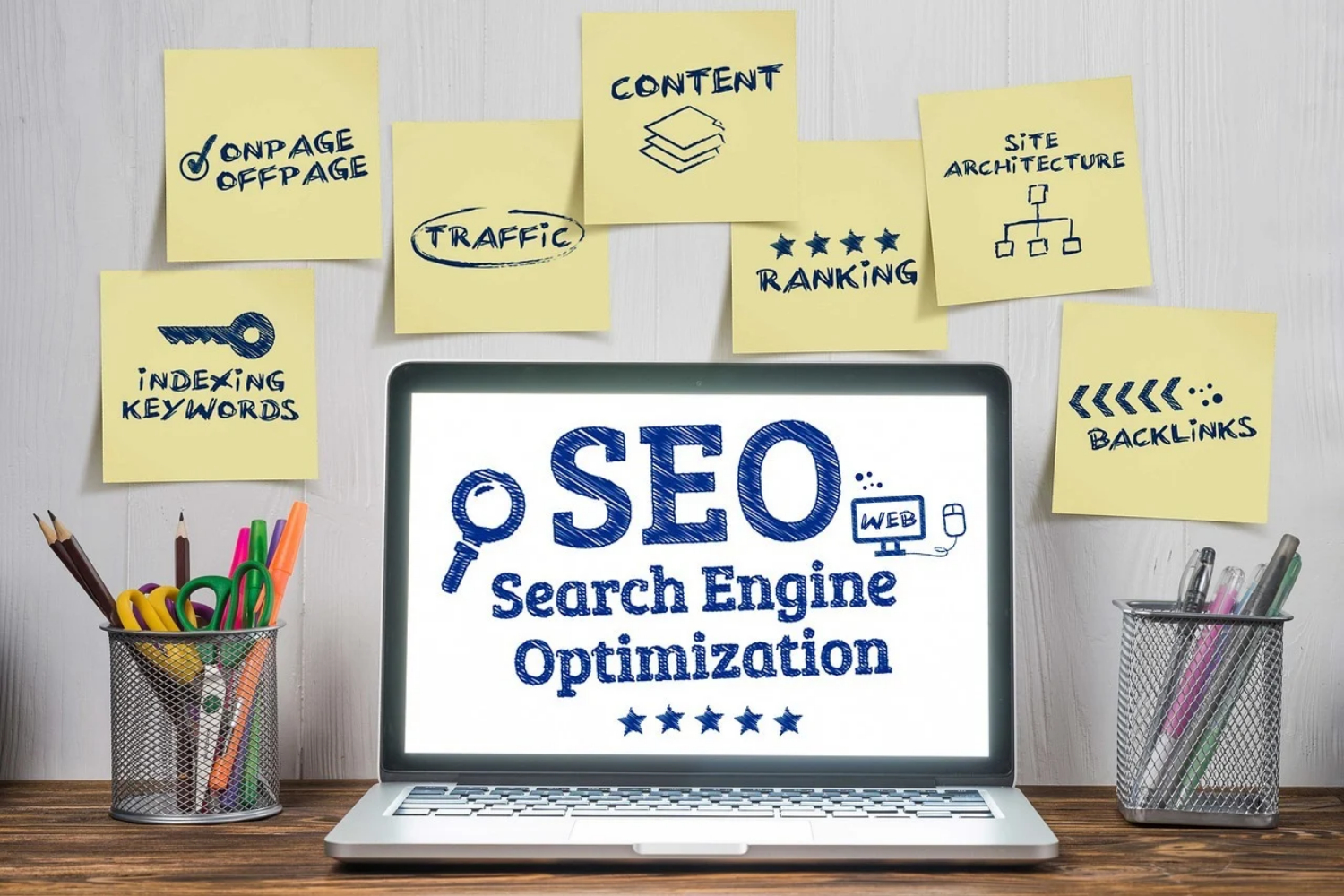
Quick answer: SEO helps pages rank in traditional search results, AEO helps content provide direct answers to specific questions, and GEO helps a brand’s information be understood and used in AI-generated responses. They overlap heavily: clear, accurate, well-structured content supports all three at the same time.
Below, you will also find a practical checklist, a look at common Mistakes When Optimizing for AI Search, and answers to common questions, so you can review your own materials and decide where to focus first.
What Do AEO, GEO and SEO Mean?
Search is changing. People no longer use search engines only to find a list of website links. They also ask complete questions and expect direct answers from search engines and AI tools.
This change has brought more attention to three terms: AEO GEO and SEO.
SEO stands for Search Engine Optimization. It focuses on improving a website’s visibility in traditional search results.
AEO stands for Answer Engine Optimization. It focuses on creating content that can provide clear answers to questions asked through answer-based search experiences.
GEO stands for Generative Engine Optimization. It focuses on helping a brand or website become visible and useful as a source for AI-generated answers.
The terms overlap, and the exact use of AEO GEO and SEO is not fully standardized across the industry. Some sources use them almost interchangeably, while others use AEO more broadly for answer-focused search and GEO specifically for generative AI systems.
What Is SEO?
SEO is the most established of the three.
Search Engine Optimization is the process of improving a website so search engines can understand its content and users can find it through relevant searches.
SEO can involve many areas, including:
- Keyword research
- Website structure
- Page titles
- Meta descriptions
- Helpful content
- Internal linking
- Technical SEO
- Mobile usability
- Page performance
- External authority signals
The main goal is to make relevant pages easier to discover and rank in traditional search results.
For example, imagine a business that provides website design services in Michigan.
Someone might search:
“website design company in Michigan”
A strong SEO strategy would help the business create and optimize relevant pages so search engines can understand the service, location, and purpose of the page.
SEO success can be measured through metrics such as rankings, organic impressions, clicks, and organic traffic.
What Is AEO?
AEO means Answer Engine Optimization.
Instead of focusing only on ranking a webpage among many links, AEO focuses on making information clear and easy for an answer system to use when responding to a question.
Questions are often longer and more natural than traditional keywords.
For example:
“What should a small business include on its website?”
An answer engine may look for content that directly explains the answer.
AEO therefore places more attention on:
- Direct answers
- Question-based content
- Clear headings
- Short, useful sections
- Structured information
- Frequently asked questions
- Clear definitions
- Easy-to-understand language
The goal is to make important information easy to identify and understand.
What Is GEO?
GEO means Generative Engine Optimization.
It is associated with generative AI systems that create answers by combining information from different sources.
Instead of simply showing ten links, a generative system may produce a written response and use information from several sources.
GEO therefore focuses on making a brand’s information useful, clear, trustworthy, and suitable for being included in AI-generated responses.
Research and industry sources describe GEO as a newer optimization area focused on visibility within generative responses.
This creates a different type of visibility.
With traditional AEO GEO and SEO, a business may want its webpage to appear high in search results.
With GEO, a business may also want its brand, services, expertise, or information to be mentioned or cited when someone asks an AI system a relevant question.
What Is the Main Difference Between AEO, GEO and SEO?
The easiest way to understand the difference is to look at the search experience each one targets.
| Approach | Main Focus | Typical Goal |
|---|---|---|
| SEO | Traditional search | Improve website visibility and rankings |
| AEO | Answer-based search | Provide clear, useful answers |
| GEO | Generative AI search | Increase visibility as a source in AI-generated answers |
These areas are connected rather than completely separate.
A website with poor technical SEO, unclear content, or weak information may struggle across all three.
A strong foundation can support traditional search while also making content easier for answer and generative systems to understand.
How Does SEO Help AEO and GEO?
SEO still matters.
AI-powered search systems need to discover and process information from the web. Good website structure, clear content, crawlability, and strong information architecture can therefore support broader search visibility.
Google‘s own guidance continues to emphasize creating helpful, reliable, people-first content rather than producing content mainly to manipulate search systems.
This means businesses should not treat AEO GEO and SEO as a reason to abandon good SEO practices.
Instead, they can build on them.
A website can have:
- Strong technical foundations
- Useful service pages
- Clear business information
- Helpful blog content
- Well-organized headings
- Consistent brand details
- Supporting structured data where appropriate
These elements can make information easier for both people and search systems to understand.
How Is AEO Different From Traditional SEO?
The biggest difference is often the format of the user’s search and the expected response.
Traditional SEO may focus heavily on a keyword such as:
“custom website design”
AEO may focus more on a question such as:
“What does custom website design include?”
The second query naturally requires an answer.
This means content should provide the answer clearly instead of forcing readers to search through a long page.
For example, a page could begin a section with:
“Custom website design includes…”
and then explain the answer in simple language.
This makes the information easier for both readers and systems to identify.
How Is GEO Different From AEO?
This is where much of the confusion comes from.
There is no single industry-wide definition that everyone follows.
Some professionals use AEO GEO and SEO as two names for nearly the same practice. Others describe AEO as the wider answer-focused approach and GEO as the part specifically focused on generative AI systems.
In practical terms, the work can overlap heavily.
Both may involve:
- Clear answers
- Strong content structure
- Useful information
- Brand consistency
- Supporting evidence
- Relevant authority signals
- Structured information
The main difference is often how the terms describe the target search experience.
Why Are Questions Important for AEO and GEO?
People often ask AI systems questions in a conversational way.
Instead of typing:
“website redesign signs”
a user might ask:
“How do I know if my business needs a website redesign?”
This creates an opportunity for businesses to build content around real questions.
Useful question-based content can include:
- What?
- Why?
- How?
- When?
- Where?
- Which?
- Who?
A business can use these questions in service pages, blogs, FAQs, guides, and educational content.
The answers should be direct and easy to understand.
Why Does Clear Content Matter for AI Search?
AI systems need information that can be understood and connected to a question.
This is one reason clear writing is important.
A page should explain:
- What the business does
- Who it serves
- What services it provides
- Where it operates
- What makes its service different
- How the process works
- How people can get in touch
For example, a web design company should not only say that it provides “innovative digital solutions.”
It can also clearly explain what those solutions include.
Specific information gives readers and search systems more useful context.
How Can Structured Content Help?
A well-organized page is easier to scan.
Headings help separate different topics. Short paragraphs make information easier to read. Bullet points make lists easier to understand.
Businesses can organize content with sections such as:
What Is the Service?
Explain the service in simple language.
Who Is It For?
Describe the type of customer who may need it.
What Does It Include?
List the main features or deliverables.
How Does It Work?
Explain the basic process.
Why Does It Matter?
Describe the practical value for the customer.
This structure can support both human readers and search-focused content strategies.
Does Schema Markup Matter for AEO and GEO?
Structured data can help search engines understand certain types of information on a webpage.
Depending on the page, businesses may use appropriate schema types for things such as organizations, products, services, articles, events, or FAQs.
However, schema should not be viewed as a guarantee that content will appear in an AI answer or special search feature.
It is better to think of structured data as one part of a broader website strategy.
The underlying content still needs to be useful, accurate, and clear.
Why Does Brand Authority Matter for GEO?
Generative AI answers may draw information from more than a company’s own website.
Third-party websites, publications, reviews, directories, and other sources can also influence how a brand is understood online. Some current industry research specifically highlights this wider source environment as an important difference between traditional SEO and generative visibility.
This means businesses should think about their overall online presence, not only their own website.
Consistent business information across trusted sources can help create a clearer digital identity.
For a company, this may include:
- Website information
- Business listings
- Industry publications
- Reviews
- Relevant directories
- Portfolio mentions
- Press coverage
- Professional profiles
The goal should be accurate and useful information, not simply creating large amounts of content.
Can One Content Strategy Support SEO, AEO, and GEO?
Yes.
Businesses do not necessarily need three completely separate content strategies.
A strong piece of content can support multiple search experiences.
For example, a blog about website redesign could:
- Target relevant search terms for SEO
- Answer common questions for AEO
- Provide clear facts and explanations that may help generative search systems understand the topic
This makes content planning more efficient.
The key is to create content for people first and then structure it so search systems can understand it.
How Should Businesses Adapt Their Website for Modern Search?
Businesses can start with the basics.
Improve Existing Content
Review important pages and make sure they clearly explain the service, audience, location, and value.
Add Question-Based Sections
Answer the questions customers ask before contacting the business.
Use Clear Headings
Break large sections into smaller, easy-to-understand topics.
Strengthen Brand Information
Make sure company names, services, locations, and other important facts are consistent.
Create Helpful Content
Publish useful guides, comparisons, explanations, and educational resources.
Keep Information Updated
Old or incorrect information can make a website less useful to both people and search systems.
What Does This Mean for Businesses in 2026?
AEO GEO and SEO: Search is becoming more varied.
People can discover businesses through traditional search results, featured answers, AI summaries, chat-based search, maps, social platforms, and other digital experiences.
That does not mean traditional SEO has disappeared.
Instead, businesses now have more places where their information may need to be understood and presented.
For a creative and digital agency such as Bella Design, this creates an opportunity to connect website design, branding, content, AEO GEO and SEO into a more complete digital strategy.
The focus should remain on making a brand easy to understand wherever customers search.
AEO GEO and SEO Content Checklist for Service Businesses
Most service businesses can improve their visibility across traditional and AI-driven search by reviewing a few core pages. For each important page, check that it:
- States clearly what the service is and who it is for in the first paragraph
- Uses descriptive headings that match the questions customers ask
- Includes a short, direct answer before going into detail
- Lists the business name, location and contact details consistently
- Links to related services and helpful supporting pages
- Shows real examples of work, where possible
- Is reviewed regularly so details stay accurate
Work through one service page at a time; once the first page is clear and accurate, the same pattern can be repeated across the rest of the site. Keep a simple log of what changed and when, so you can compare how each page performs over the following months and decide which updates to apply elsewhere.
This kind of checklist keeps the focus on usefulness for people, which is the foundation every search approach relies on.
Common Mistakes When Optimizing for AI Search
As interest in AI search grows, some businesses make changes that do not help. Common mistakes include:
- Rewriting pages only for keywords instead of for clarity
- Publishing many thin pages that repeat the same message
- Leaving out basic facts like location, services and contact details
- Using vague headings that do not describe the section
- Letting outdated information stay on the website
Avoiding these mistakes keeps your content trustworthy for both readers and search systems.
Frequently Asked Questions
What is the difference between AEO GEO and SEO?
SEO focuses mainly on improving visibility in traditional search results, while AEO focuses on making content useful and easy to extract as an answer to user questions.
Are AEO and GEO the same thing?
The terms are often used in similar ways, and there is no single standard definition. AEO is commonly used for answer-focused search, while GEO often refers specifically to visibility in generative AI responses.
Does SEO still matter with AI search?
Yes. SEO provides important foundations such as crawlable pages, useful content, clear structure, and strong website organization. These can also support newer AI-search strategies.
How can a business prepare for AEO GEO and SEO?
Businesses can create clear and helpful content, answer real customer questions, maintain accurate brand information, use suitable structured data, and build a strong overall online presence.
Do I need separate content for SEO, AEO and GEO?
Usually not. One well-organized page with clear answers, accurate facts and helpful detail can support all three approaches.
How long should a direct answer be?
A short paragraph of a few sentences is often enough to answer the main question clearly before the page goes into more detail.
Does local information matter for AI search?
Accurate business details, such as your name, service area and contact information, help search systems understand who you are and where you work.
Where should a business start?
Start with your most important service pages. Make sure each one clearly explains the service, answers common questions and makes the next step easy.
Are headings important for AI-generated answers?
Clear, descriptive headings help readers and search systems understand what each section covers, which makes answers easier to find.
Should older blog posts be updated?
Yes. Refreshing older posts with accurate details, clearer answers and helpful structure can keep them useful for readers and search.
Final Thoughts
AEO GEO and SEO are different ways of thinking about visibility across today’s changing search landscape. SEO focuses on traditional search visibility, AEO focuses on providing useful answers, and GEO focuses on visibility within generative AI experiences. The terminology can overlap, but the central goal is similar: make a business’s information clear, useful, trustworthy, and easy to understand.
Businesses do not need to choose only one approach. A strong website can combine solid SEO foundations with question-based content and information that is clear enough for newer AI-powered search experiences. If you want to improve your website’s search visibility and prepare your brand for modern search, contact Bella Design to discuss AEO GEO and SEO website design, and digital growth solutions.
Want your pages to be clearer for readers, search engines and AI tools alike? Bella Design, based in Byron Center, Michigan, offers SEO, AEO and GEO support alongside website design for West Michigan businesses and beyond. Learn more on our services page, get in touch or call (616) 450-6873.