
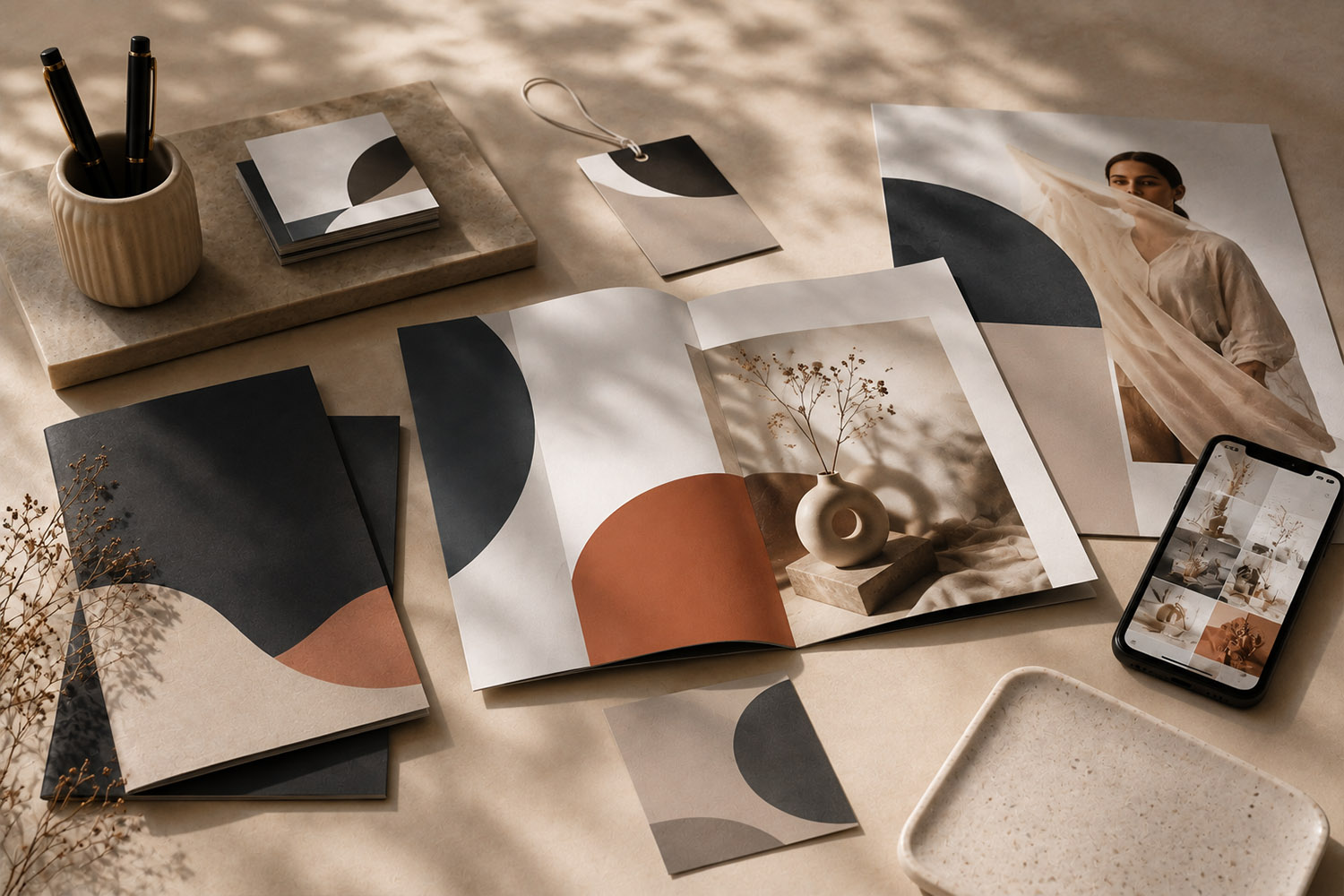
Every brand has something to communicate. It might be a new product, a special offer, an upcoming launch, an important announcement, or simply a reason for customers to pay attention. The challenge is presenting that message in a way that feels clear, engaging, and unmistakably connected to your brand.
That is where promotional design makes a difference.
From brochures and campaign graphics to social media assets, advertisements, presentations, and printed materials, promotional design helps transform business messages into visual experiences that capture attention and encourage action.
At Bella Design, we believe effective promotional materials should do more than look attractive. They should communicate with purpose, maintain brand consistency, and create a memorable connection with the audience.
Quick answer: Promotional design turns attention into engagement by pairing one clear message with strong visual hierarchy and consistent branding. When a campaign looks the same across flyers, social posts, emails and signage, and every piece ends with a clear call to action, audiences are more likely to notice, remember and respond.
Below, you will also find a practical checklist, a look at common Campaign Design Mistakes, and answers to common questions, so you can review your own materials and decide where to focus first.
Why Promotional Design Matters
People encounter an enormous amount of visual content every day. Social feeds move quickly, inboxes are crowded, advertisements compete for attention, and customers often make decisions within seconds.
Your promotional materials need to communicate quickly.
Strong design creates a visual hierarchy that helps audiences understand what they are looking at, why it matters, and what they should do next.
Typography, color, imagery, composition, and messaging all work together to create that experience.
When these elements are carefully considered, promotional design can make even a simple message feel more engaging, professional, and valuable.
Start With a Clear Message
Good promotional design begins before any visual elements are created.
The first question should always be: What are we trying to communicate?
A campaign designed to introduce a new service will require a different approach from one promoting a limited-time offer. A product launch may need to build excitement, while a corporate brochure may need to communicate credibility and detailed information.
Understanding the objective helps determine the appropriate visual direction.
Rather than adding design simply for decoration, every creative decision should support the central message. The strongest promotional design materials usually communicate one primary idea clearly instead of trying to say everything at once.
Capturing Attention Through Visual Hierarchy
Once the message is established, design helps determine what the audience sees first.
Visual hierarchy uses elements such as scale, contrast, typography, positioning, imagery, and spacing to guide attention.
A strong headline might introduce the main message. Supporting copy can provide additional context. Imagery can establish emotion or personality, while a clear call to action tells the viewer what to do next.
When everything has the same visual importance, communication becomes confusing.
Thoughtful hierarchy creates order and allows audiences to understand information naturally. This is particularly important for promotional design materials, where viewers may only give the design a few seconds of attention.
Staying Consistent With Your Brand
Promotional campaigns often provide opportunities to experiment with new visual ideas, but they should still feel connected to the overall brand.
Your logo, colors, typography, imagery, graphic language, and tone create recognition. If promotional design materials suddenly look completely different, that recognition can be lost.
The goal is to find a balance.
Campaigns should have enough creative personality to feel fresh and attract attention while retaining the visual characteristics that make your brand recognizable.
A strong brand identity makes this easier because it provides a flexible creative foundation. New campaigns can evolve while still feeling like part of the same visual world.
Designing Across Digital Channels
Modern promotional campaigns rarely exist in only one place.
A single campaign may need to appear across social media, websites, email newsletters, digital advertisements, presentations, and other online platforms.
Each format has different dimensions, viewing habits, and content requirements.
A social media graphic needs to communicate quickly. A landing page may provide more detailed information. A digital advertisement needs a strong message and immediate visual impact. An email campaign must balance imagery with readable content and a clear action.
Rather than simply resizing one design, effective promotional design considers how the idea should work within each environment.
This creates a more cohesive and professional campaign across every digital touchpoint.
Print Promotional Design Still Creates Impact
Digital communication may dominate modern marketing, but printed materials continue to provide valuable opportunities for brands.
Brochures, flyers, posters, invitations, direct mail, presentation folders, and other physical materials create a tangible interaction that digital experiences cannot always replicate.
Print also introduces additional design considerations.
Paper selection, dimensions, finishes, folds, image quality, typography, and production techniques can all influence the final result.
A thoughtfully designed printed piece can feel personal, premium, and memorable—particularly when it complements the brand’s digital presence.
When print and digital materials share a consistent visual direction, they create a stronger overall brand experience.
Promotional Design for Social Media
Social media has become one of the most active spaces for promotional communication.
Brands use it to introduce services, announce products, share offers, communicate news, and stay connected with their audiences.
Consistency is especially important here.
When someone visits your social profile, individual posts should feel connected without becoming repetitive. A flexible visual system can help maintain recognizable typography, colors, image treatments, and graphic elements while allowing enough variation for different types of content.
The objective is not simply to create attractive individual posts. It is to build a visual presence that becomes recognizable over time.
Campaigns Should Encourage Action
Promotional design ultimately exists to communicate and encourage some form of response.
That response might be making a purchase, visiting a website, booking a consultation, attending a launch, downloading information, following a brand, or simply remembering a message.
Calls to action should therefore be considered as part of the design rather than added at the end.
They need to be clear, visible, and appropriate to the campaign.
Good design creates a natural journey from attention to information and finally to action. The audience should never have to search for what they are expected to do next.
Creating Flexible Campaign Systems
A successful campaign may require dozens of individual assets.
Instead of designing every piece independently, creating a flexible visual system can make the campaign more consistent and efficient.
This system might establish typography, colors, graphic elements, image treatments, layouts, and spacing principles that can adapt across different formats.
A brochure, Instagram post, website banner, advertisement, and presentation slide can then feel connected without looking identical.
This approach also makes future campaign materials easier to produce while protecting the quality and consistency of the brand.
Design That Supports the Message
Promotional design should never compete with the message it is trying to communicate.
The most effective work balances creativity with clarity.
Bold visual ideas can capture attention, but audiences still need to understand what is being offered. Beautiful typography can create personality, but it still needs to remain readable. Strong imagery can create emotion, but it should support rather than distract from the message.
Every element needs a reason to be there.
When design and communication work together, promotional design materials become more than attractive graphics—they become useful tools for building awareness and encouraging engagement.
Promotional Design Campaign Checklist
Before launching a campaign, check that every piece supports the same goal:
- One main message that can be understood in seconds
- A clear call to action, such as visit, call or register
- Consistent colors, fonts and logo use across all pieces
- Sizes prepared for each channel: print, social, email and web
- Dates, locations and contact details checked for accuracy
- A matching web page or landing page if people need more information
Assigning one person to approve every piece against this list helps keep a busy campaign on track. That person can check dates, sizes and calls to action across print, social and email before anything goes out, which reduces last-minute corrections and keeps every piece consistent with the campaign’s main message and the brand.
Working from a checklist helps campaigns feel coordinated and professional.
Common Campaign Design Mistakes
Even strong ideas can lose impact because of a few avoidable issues:
- Too many messages competing on one piece
- Small or hard-to-read text
- Calls to action that are vague or missing
- Designs that change from one channel to another
- Last-minute changes that skip proofreading
Planning ahead and keeping the message focused helps avoid these problems.
Creating Promotional Materials With Purpose
Every campaign is an opportunity to strengthen the way people experience your brand.
At Bella Design, we create promotional design materials that combine thoughtful visual direction with clear communication. From brochures and campaign graphics to digital assets, presentations, advertisements, and printed materials, each piece is designed around your brand, message, and audience.
We carefully consider typography, color, imagery, composition, hierarchy, and consistency to create materials that feel distinctive while remaining functional.
Whether you are launching something new, promoting a service, communicating an offer, or simply strengthening your everyday marketing, thoughtful design can help your message stand out.
Because successful promotional design is not only about being noticed.
It is about being understood, remembered, and giving your audience a reason to take the next step.
Have something worth promoting? Let’s turn your message into a visual experience that captures attention and makes an impact.
Frequently Asked Questions
What is promotional design?
It is the design of materials used to promote an event, product, service or offer, such as flyers, posters, social graphics, emails and signage.
How many pieces does a campaign need?
It depends on where your audience is. Some campaigns need only a flyer and social posts, while others include email, signage and web graphics.
Should promotions follow my brand guidelines?
Yes. Campaigns can have their own theme, but they should still use your core brand elements so people recognize your business.
Can one design be reused across channels?
A core design can be adapted for different sizes and formats, which keeps the campaign consistent and saves time.
Is print still useful for campaigns?
Yes. Flyers, posters and signage can reach people in physical spaces and work well alongside digital channels.
How early should a campaign be planned?
Starting early gives time for design, feedback, proofreading and printing, which helps avoid rushed mistakes.
What makes a flyer easy to read?
A short headline, one main message, readable text sizes, strong contrast and a single clear next step.
Planning a launch, event or seasonal offer? Bella Design creates campaign flyers, signage and social graphics from Byron Center, Michigan, for West Michigan businesses and beyond. Check out our promotional design services, share your campaign details or call (616) 450-6873.