
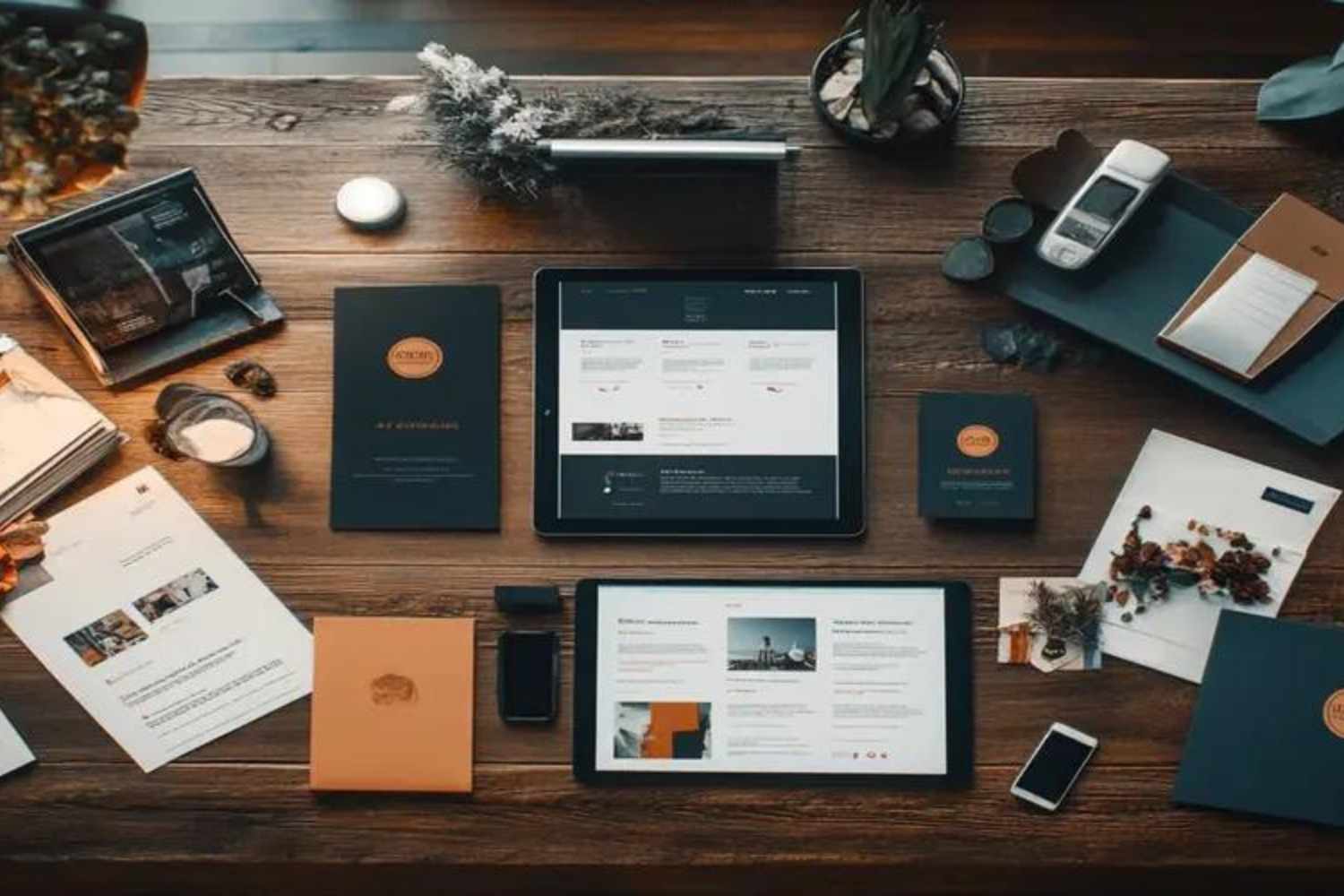
Marketing is no longer just about telling people what your business offers. It is about creating an experience that helps your audience understand, remember, and connect with your brand. While websites and social media play a major role in modern marketing, well-designed marketing collateral continues to be an important part of effective brand communication.
Brochures, flyers, presentations, promotional materials, sales sheets, digital assets, and other branded materials can turn complex ideas into clear and engaging visual experiences. When thoughtfully designed, these materials do more than provide information. They reinforce your identity, support your marketing strategy, and help your audience recognize your brand across different touchpoints.
At Bella Design, we approach marketing collateral as an extension of a brand’s visual language. Every element—from typography and imagery to color, spacing, and composition—is carefully considered to create materials that communicate with clarity and consistency.
Quick answer: Marketing collateral turns a brand message into a visual experience by using design to organize information, guide attention and reflect the brand’s personality. Brochures, flyers, presentations and digital assets that share the same typography, color and imagery help audiences understand the message quickly and remember the business behind it.
Below, you will also find a practical checklist, a look at common Collateral Design Mistakes to Avoid, and answers to common questions, so you can review your own materials and decide where to focus first.
What Is Marketing Collateral?
Marketing collateral refers to the collection of branded materials a business uses to communicate with customers, prospects, partners, and other audiences.
These materials can be printed, digital, or designed for both formats. Common examples include:
- Brochures and company profiles
- Flyers and promotional materials
- Business presentations
- Sales sheets and information sheets
- Product and service guides
- Digital advertisements
- Social media graphics
- Event materials
- Branded documents
- Email marketing graphics
- Infographics
- Presentation templates
- Promotional campaigns
Each format has a different purpose, but they should all work together as part of a consistent visual identity.
A brochure should feel connected to the company’s website. A presentation should look like it belongs to the same brand as a sales sheet. A promotional graphic should use recognizable visual elements that audiences can associate with the business.
This consistency helps create a stronger and more professional brand presence.
Why Is Marketing Collateral Important for a Brand?
A business may have a strong product or service, but communicating its value effectively is just as important as delivering it.
Well-designed marketing materials can help bridge that communication gap. They organize information, highlight important messages, and make content easier to understand.
Marketing collateral can also support a variety of stages in the customer journey. A potential customer may first encounter a digital advertisement, download a company brochure, review a presentation, and eventually receive a sales document. When all these materials share a cohesive visual language, the overall experience feels intentional.
Strong branded materials can help businesses:
- Present information more clearly
- Build brand recognition
- Support sales and marketing teams
- Communicate complex ideas visually
- Create professional customer experiences
- Reinforce brand credibility
- Maintain visual consistency
- Make important messages easier to remember
The goal is not simply to make something attractive. Effective design combines visual appeal with communication and purpose.
How Does Design Make Marketing Collateral More Effective?
The best branded materials balance creativity with clarity.
A beautifully designed brochure is not effective if readers cannot quickly find the information they need. Likewise, a presentation filled with text may contain valuable information but fail to hold the audience’s attention.
Good design creates a visual hierarchy that guides people through the content.
Typography establishes structure and helps distinguish headings, subheadings, body copy, captions, and important messages. Imagery adds context and emotion. Color creates emphasis and reinforces brand recognition. Composition determines how all these elements work together on the page or screen.
At Bella Design, these details are carefully balanced to create materials that feel cohesive without becoming visually overwhelming.
What Types of Marketing Collateral Can Businesses Use?
Different marketing goals require different materials. The right format depends on the audience, message, industry, and intended action.
Brochures
Brochures are useful for communicating a larger amount of information in an organized format. They can introduce a company, explain services, showcase products, or support an event or campaign.
A strong brochure uses layout and visual hierarchy to make information approachable rather than overwhelming.
Flyers
Flyers are often designed for quick communication. They may promote an event, service, offer, product, or announcement.
Because audiences may only spend a few seconds looking at a flyer, the design needs to make the main message immediately understandable.
Presentations
Presentations combine storytelling, information, and visuals. A professionally designed presentation can help sales teams, executives, educators, and organizations communicate ideas with greater confidence.
Consistent layouts, typography, imagery, charts, and visual elements can transform a basic presentation into a compelling brand experience.
Promotional Materials
Promotional materials can include campaign graphics, event materials, branded handouts, advertisements, and other assets designed to support marketing initiatives.
Consistency is particularly important when multiple pieces are created for the same campaign.
Digital Assets
Marketing collateral is not limited to print. Digital graphics for websites, email campaigns, social media, online advertisements, and digital presentations can also become valuable parts of a brand’s marketing toolkit.
These assets should maintain the same visual principles used throughout the rest of the brand.
How Can Consistency Strengthen Your Marketing Collateral?
Imagine seeing the same company represented with completely different fonts, colors, imagery, and layouts across every marketing channel.
Even if each individual piece looks attractive, the overall brand can feel disconnected.
Consistency solves this problem.
A strong visual system provides guidelines for how a brand should appear across different materials. This does not mean every piece needs to look identical. Instead, each design should share recognizable characteristics.
Consistency may come through:
- Brand colors
- Typography
- Logo usage
- Image direction
- Graphic elements
- Layout principles
- Iconography
- Spacing and composition
- Tone of visual communication
When these elements are applied thoughtfully, marketing collateral becomes part of a recognizable brand ecosystem.
Can Marketing Collateral Help Explain Complex Ideas?
Absolutely. One of the greatest strengths of thoughtful visual design is its ability to simplify information.
Businesses often have to communicate technical services, complicated processes, detailed offerings, statistics, or large amounts of information. Presenting everything as blocks of text can make the message difficult to absorb.
Design can introduce structure.
For example, information can be divided into sections, supported with illustrations, presented through diagrams, organized with icons, or highlighted through typography. Important points can receive greater visual emphasis while secondary information remains accessible without competing for attention.
This approach allows the audience to understand the message more naturally.
Effective brochures and print pieces do not remove important information. It organizes it so people can navigate it more easily.
What Makes Marketing Collateral Visually Engaging?
Visual engagement comes from more than adding attractive images or decorative elements. It comes from understanding how different design components work together.
Typography
Typography establishes personality and hierarchy. The right type choices can make content feel professional, modern, approachable, sophisticated, or energetic.
Imagery
Photography, illustrations, graphics, and other visual elements can create emotion and reinforce the message. Images should support the content rather than simply fill empty space.
Color
Color can draw attention, create contrast, communicate mood, and strengthen brand recognition. A thoughtful palette can also help organize information.
Composition
Composition determines how elements are positioned and how the viewer moves through the design. Good spacing and alignment can make even information-heavy materials feel clean and accessible.
Hierarchy
Visual hierarchy tells the audience what to notice first, second, and third. This is especially important for marketing materials where the viewer needs to understand the main message quickly.
When these elements work together, the result is a design that feels intentional and communicates effectively.
How Should Marketing Collateral Support Your Brand Strategy?
Marketing collateral should never exist independently from the broader brand.
Before beginning a design, it is important to understand the brand, its audience, its objectives, and the message the material needs to communicate.
A sales presentation may need to persuade. A company brochure may need to establish credibility. An event flyer may need to create immediate excitement. A digital campaign asset may need to generate clicks or engagement.
The design approach should reflect that purpose.
This is why effective marketing materials are not created simply by placing a logo, colors, and text into a template. They require strategic thinking about audience, communication, content, and visual presentation.
Why Professional Marketing Collateral Design Matters
Businesses often have valuable ideas and information but may struggle to translate them into compelling visual communication.
Professional design brings structure to that information.
A designer can determine what needs emphasis, how content should be organized, which visual elements support the message, and how the final piece should connect with the existing brand identity.
This is particularly valuable when a business needs multiple materials across different platforms.
Instead of creating disconnected designs, a professional approach can establish a unified system that makes future marketing materials easier to recognize and maintain.
How Can Bella Design Help With Marketing Collateral?
At Bella Design, we create marketing materials that turn ideas and messages into engaging visual experiences.
Our approach combines thoughtful design with brand consistency. From brochures and flyers to presentations, promotional materials, and digital assets, every piece is developed with the brand and audience in mind.
We carefully balance:
- Typography
- Imagery
- Color
- Composition
- Information hierarchy
- Brand consistency
- Audience expectations
The result is marketing collateral designed not only to look polished but also to communicate with purpose.
Whether you are introducing a new service, preparing a presentation, promoting an event, supporting a campaign, or building a collection of branded materials, thoughtful design can help your message make a stronger impression.
Marketing Collateral Checklist Before You Print
Before sending a piece to print or sharing it online, a final review can prevent costly mistakes:
- Is the main message clear within a few seconds?
- Are the logo, colors and fonts consistent with your brand?
- Is contact information accurate and easy to find?
- Is there a clear call to action?
- Are images high resolution and suitable for print?
- Has someone outside the project proofread the text?
- Is the file set up with the correct size and bleed for the printer?
Printing a single proof and reading it away from the screen is often the quickest way to catch errors the checklist is meant to prevent. Ask a colleague who was not involved in the project to read the proof too; a fresh pair of eyes often notices a confusing sentence, an outdated phone number or a missing call to action that the team has stopped seeing.
A short checklist like this helps every piece reflect the professionalism of your brand.
Common Collateral Design Mistakes to Avoid
Some issues appear again and again in brochures, flyers and presentations:
- Trying to fit too much text on one page
- Using several unrelated fonts
- Low-resolution logos or photos
- Missing or unclear next steps
- Pieces that look different from the website
Keeping designs focused and consistent usually makes materials easier to read and more effective.
Is Your Marketing Collateral Communicating Your Brand Clearly?
Every interaction with your audience is an opportunity to reinforce your brand.
Marketing collateral gives businesses a practical way to communicate their ideas across both physical and digital experiences. When these materials are strategically planned and thoughtfully designed, they can make information easier to understand, create stronger visual recognition, and provide a more consistent customer experience.
The most effective marketing collateral is not simply decorative. It connects brand design, communication, and audience needs into one cohesive visual experience.
If your current brochures, presentations, flyers, promotional materials, or digital assets feel inconsistent or fail to communicate your message effectively, it may be time to rethink the design approach.
With the right strategy and creative direction, your marketing materials can become more than supporting documents—they can become powerful extensions of your brand.
Ready to turn your ideas into engaging visual experiences? Explore Bella Design’s approach to marketing collateral and discover how thoughtful design can help your brand communicate with greater clarity, consistency, and impact.
Frequently Asked Questions
What is the most useful piece of marketing collateral?
It depends on your audience and goals. A brochure may suit detailed services, while a flyer may work better for a single event or offer.
Should printed and digital materials look the same?
They should share the same brand style, but layouts may be adjusted so each format is easy to read on paper or on a screen.
How often should collateral be updated?
Review materials when services, contact details or branding change, so nothing outdated reaches customers.
Can a designer work with my existing brand?
Yes. A designer can build new materials around your current logo, colors and fonts so they fit your established identity.
What information should every brochure include?
At minimum: your business name, a clear description of what you offer, a call to action and accurate contact details.
Can printed pieces support my website?
Yes. Printed materials can point readers to specific website pages for more details, connecting offline and online marketing.
Brochures, flyers and presentations work best when they share one clear voice. Bella Design produces print and digital materials from Byron Center, Michigan, for clients in West Michigan and beyond. Explore our collateral design services, start a conversation or call (616) 450-6873.