
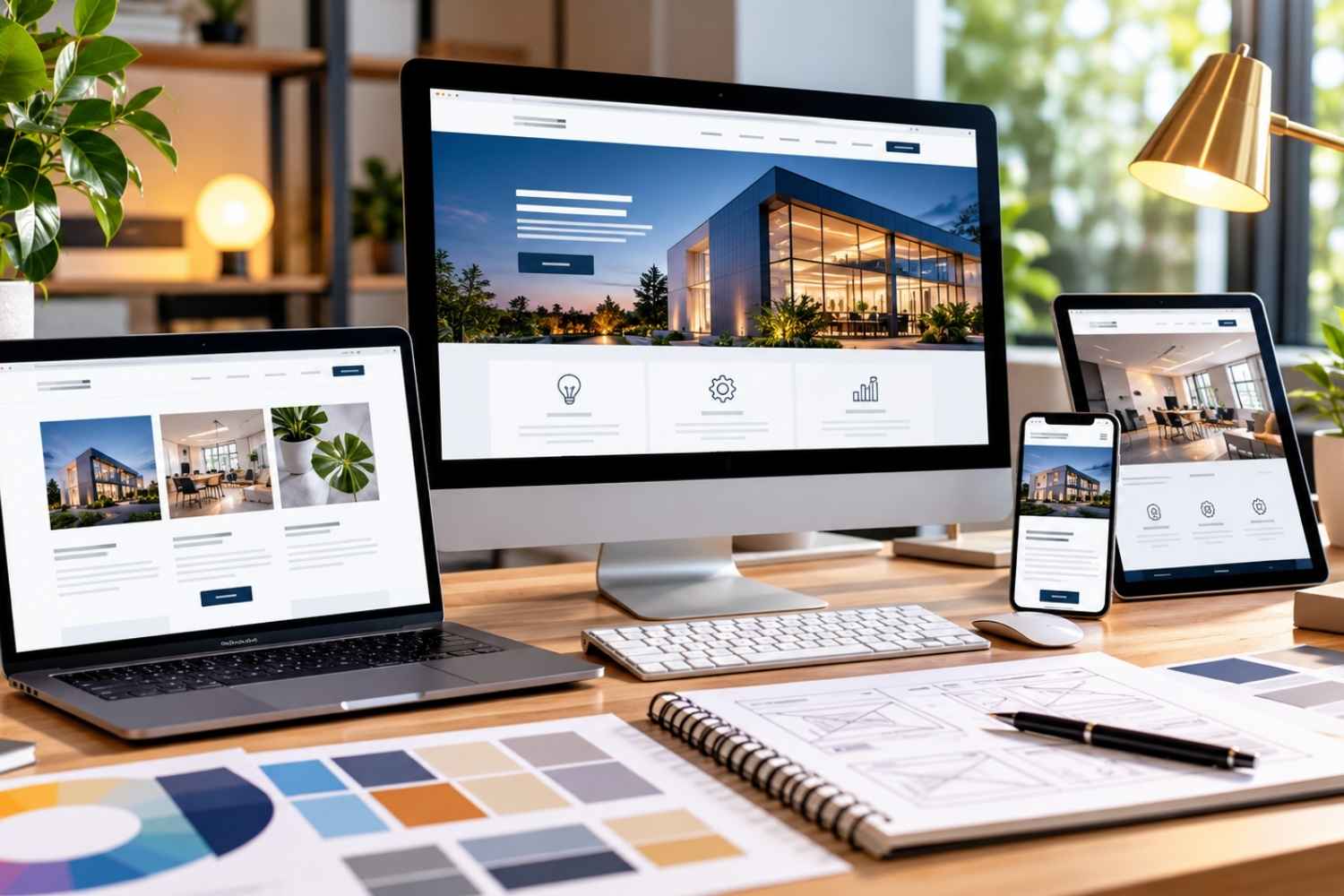
In today’s digital world, a business needs more than a good product or service to stand out. Customers want to understand what a company offers, what makes it different, and whether they can trust it before making a decision. A well-designed website helps answer these questions while giving a business a consistent and professional online presence.
A professional website is more than a digital brochure. It is a central place where customers can explore services, learn about a brand, view examples of previous work, and get in touch. When its design, content, and functionality work together, a professional website can support marketing, build credibility, and help turn visitors into potential customers.
For small businesses, growing brands, and established companies, investing in thoughtful website design can make it easier to communicate value and connect with the right audience. The key is creating an online experience that reflects the business’s identity while making information easy to find and understand.
Quick answer: A professional website helps a business build a stronger brand by giving people one trusted place to learn who it is, what it offers and how to get in touch. When design, content and navigation reflect the same identity used in print and on social media, visitors recognize the brand and feel more confident reaching out.
Below, you will also find a practical checklist, a look at common Website Mistakes That Weaken a Brand, and answers to common questions, so you can review your own materials and decide where to focus first.
Why Is a Professional Website Important for Your Brand?
Your website often shapes a customer’s first impression of your business. A cluttered layout, outdated information, or confusing navigation can make visitors question the quality of your services. In contrast, a clear and visually consistent website communicates care, professionalism, and attention to detail.
A strong business website should reflect your brand’s personality through its colors, typography, imagery, messaging, and layout. These elements should work together to create a recognizable experience rather than appear as separate design choices.
A professional website helps your brand by:
- Establishing a credible online presence.
- Communicating your products and services clearly.
- Creating a consistent visual identity across digital channels.
- Helping customers understand your business’s unique value.
- Providing a reliable destination for visitors from search engines, social media, and marketing campaigns.
- Making it easier for prospective customers to contact you.
Consistency matters because customers may encounter your brand in several places before making a decision. When your professional website aligns with your social media graphics, marketing materials, and other communications, your business becomes easier to recognize and remember.
How Does Professional Website Design Strengthen Brand Identity?
Brand identity includes the visual and verbal elements that distinguish one business from another. A website brings these elements together in an interactive environment where customers can experience the brand rather than simply read about it.
Use Colors and Typography Consistently
Colors influence the overall feeling of a professional website, while typography affects readability and visual personality. A carefully selected color palette and a consistent font system help create a unified appearance throughout the site.
For example, a consulting firm may use clean typography and restrained colors to communicate professionalism. A creative studio may choose more expressive layouts and imagery to demonstrate its design perspective.
The important point is that design choices should reflect the audience, industry, and personality of the business. Trends can inspire a professional website, but they should not replace a clear brand strategy.
Choose Images That Support Your Message
Images help visitors understand what a business does and what makes it distinctive. Relevant photography, illustrations, graphics, and portfolio examples can communicate ideas more quickly than lengthy blocks of text.
Businesses should choose visuals that complement their brand and support the purpose of each page. Generic imagery that has little connection to the business can weaken the experience, while thoughtful visual choices can make the professional website feel more authentic.
Develop a Clear Visual Hierarchy
Visual hierarchy guides visitors toward the most important information. Headings, spacing, font sizes, contrasting elements, and calls to action help people understand where to look first.
A homepage, for instance, should quickly explain what the business offers and who it serves. Supporting sections can then introduce services, demonstrate expertise, and guide visitors toward the next step.
When these elements work together, website design becomes a practical way to strengthen brand recognition and improve communication.
What Features Should Every Effective Business Website Include?
An attractive website is valuable, but appearance alone is not enough. A successful website should also be easy to navigate, informative, accessible, and designed around the needs of its visitors.
Here are some important features to consider.
1. Clear Navigation
Visitors should be able to find essential information without unnecessary effort. A straightforward navigation menu can include pages such as Home, About, Services, Portfolio, Blog, and Contact, depending on the business’s needs.
Organizing content into logical categories reduces confusion and helps users move naturally through the professional website.
2. Mobile-Friendly Design
People access websites using smartphones, tablets, laptops, and desktop computers. A responsive website adapts its layout to different screen sizes so that text remains readable, images display properly, and navigation remains usable.
Mobile usability also matters for search visibility and customer experience. Businesses should test important pages and forms on smaller screens rather than assuming a desktop design will automatically work well on mobile devices.
3. Useful and Relevant Content
Website content should answer the questions customers are likely to ask. Visitors need to understand what you offer, how your services work, who you help, and how they can take the next step.
Use descriptive headings, concise paragraphs, and helpful examples. Avoid vague statements that could apply to almost any company. Specific, accurate information gives visitors a clearer reason to consider your business.
4. Strong Calls to Action
A call to action tells visitors what they can do next. Examples include:
- Request a Quote
- Schedule a Consultation
- Explore Our Services
- View Our Portfolio
- Contact Our Team
Place calls to action where they make sense within the customer journey. A visitor who has just learned about a service may be ready to request more information, while someone exploring a portfolio may want to see additional examples first.
5. Fast Loading and Reliable Functionality
Slow pages, broken links, oversized images, and malfunctioning forms can frustrate users. Optimized images, efficient code, dependable hosting, and regular technical checks help create a smoother browsing experience.
A website should also be maintained after launch. Software updates, security measures, backups, and routine testing help keep it functional as the business and its digital needs evolve.
Can a Professional Website Improve Search Engine Visibility?
Yes. A well-structured website can support search engine optimization (SEO) by helping search engines understand its content and helping users find relevant information.
However, a professional design alone does not guarantee high rankings. Search visibility depends on several factors, including content relevance, technical accessibility, site performance, competition, and the overall quality of the professional website.
Businesses can strengthen their SEO foundations through the following practices.
Create Helpful, Keyword-Relevant Content
Identify the terms potential customers use when searching for your products or services. Incorporate relevant keywords naturally into page titles, headings, descriptions, and body content where they fit the topic.
For a professional website design company, relevant subjects might include professional website design, responsive website development, business website design, or brand-focused web design.
The goal is to address the visitor’s actual needs. Repeating the same phrase excessively can make content awkward and reduce its usefulness. Clear, comprehensive information is more valuable than keyword repetition for its own sake.
Organize Pages Logically
Each page should have a clear purpose and descriptive heading structure. Service pages should explain individual offerings, while portfolio pages can demonstrate work and blog articles can answer common questions.
Logical internal links help visitors discover related information and allow search engines to understand the relationship between pages.
Optimize Images and Page Performance
Descriptive image file names and useful alternative text can improve accessibility and provide context about visual content. Compressing images and avoiding unnecessary scripts can also help pages load more efficiently.
A well-planned website combines design and SEO from the beginning rather than treating search optimization as an afterthought.
Support Emerging Search Experiences
Customers increasingly encounter information through AI-powered search and answer platforms as well as traditional search engines. Clear service descriptions, useful answers, accurate business information, and well-organized content can help these systems interpret a professional website.
Bella Design offers SEO, Answer Engine Optimization (AEO), and Generative Engine Optimization (GEO) alongside its creative services, reflecting the importance of building visibility across different discovery experiences. 6 Expert Services for Digital Growth.+1
How Does User Experience Turn Website Visitors Into Customers?
User experience (UX) describes how people interact with a professional website and how easy it is for them to accomplish their goals. A website can look impressive but still lose potential customers if important information is difficult to find or its contact process is confusing.
An effective user experience starts by understanding the audience.
Consider what visitors want to know when they arrive. Are they comparing services, researching a company, looking for pricing information, or trying to contact a professional? The website should make those tasks straightforward.
Several practices can improve UX:
- Keep layouts intuitive: Use familiar navigation patterns and organize related information together.
- Make text readable: Choose appropriate font sizes, line spacing, and contrast.
- Simplify forms: Request only the information needed to respond to an inquiry.
- Use accessible design: Provide meaningful image descriptions, keyboard-friendly navigation, and sufficient color contrast.
- Make contact details easy to find: Include relevant contact information and clear next steps.
- Test important journeys: Check whether visitors can complete tasks on both mobile and desktop devices.
Businesses can also review website analytics to understand which pages attract attention, where users leave, and which actions generate inquiries. These observations can guide practical improvements over time.
A thoughtful user experience respects the visitor’s time. When people can find answers and take action without unnecessary obstacles, the professional website is better positioned to support business goals.
Why Should Your Website Match Your Other Marketing Materials?
A business rarely communicates through its website alone. Customers may also encounter its brochures, presentations, advertisements, social media posts, annual reports, and promotional materials.
When these touchpoints use inconsistent colors, typography, imagery, and messaging, the brand can feel fragmented. Consistency helps create a connected experience and reinforces what customers recognize about the business.
A cohesive marketing strategy considers how each channel supports the others. For example, a campaign might introduce a new service through social media, direct interested visitors to a dedicated website page, and use a downloadable brochure to provide additional details.
This is where coordinated creative services become valuable. Bella Design works across brand identity, marketing collateral, annual reports, website development, and digital visibility, helping businesses approach their communications as connected parts of a broader brand experience. 6 Expert Services for Digital Growth.+1
The benefit is not simply making everything look alike. It is ensuring that every interaction communicates the same core message while serving its specific purpose.
What Should You Consider Before Investing in Website Development?
Before beginning a professional website project, clarify what the website needs to accomplish. This makes it easier to prioritize features, plan content, and evaluate the finished result.
Start with these questions:
- Who is the target audience? Understand the people you want to reach and the information they need.
- What is the primary goal? Decide whether the website should generate inquiries, showcase creative work, sell products, educate visitors, or support another business objective.
- What makes your business different? Identify the strengths and benefits your website should communicate.
- Which pages are essential? Plan the core pages around customer needs rather than adding sections without a clear purpose.
- What content is required? Prepare service descriptions, images, case studies, testimonials, and contact information where appropriate.
- How will success be measured? Choose meaningful indicators such as qualified inquiries, completed forms, relevant organic traffic, or engagement with important pages.
- Who will maintain the site? Establish a plan for updates, security, performance checks, and ongoing content improvements.
It is also useful to consider future growth. A website should be able to accommodate new services, additional content, changing customer expectations, and evolving marketing priorities.
Professional website development is most effective when design decisions are connected to clear business objectives. Instead of focusing only on how a website looks at launch, consider how well it can serve customers over time.
Why Work With a Professional Website Design Studio?
Building a website involves more than arranging images and text on a screen. It requires decisions about brand positioning, content structure, visual design, responsive layouts, functionality, and discoverability.
A professional design partner can help bring these elements together while keeping the business’s audience and objectives in focus.
Bella Design is a creative design studio based in Byron Center, Michigan. Its website development service emphasizes modern, responsive websites that combine thoughtful design, smooth functionality, brand consistency, and user-friendly experiences. The studio also provides brand identity, marketing collateral, annual reports, and SEO/AEO/GEO services. 6 Expert Services for Digital Growth.+1
This combination can be particularly useful for businesses that want their website to feel consistent with their wider brand rather than operate as a disconnected marketing asset.
When evaluating a website design partner, review the studio’s portfolio, ask about its project process, discuss your goals, and clarify the expected deliverables. Make sure the approach considers both the visual experience and the practical needs of your audience.
A good collaboration begins with understanding the business. From there, design and development can translate its goals into a website that communicates clearly and supports meaningful customer interactions.
Conclusion: How Can the Right Website Support Long-Term Business Growth?
A professional website gives your business a central platform to communicate its identity, explain its services, establish credibility, and connect with potential customers. When it combines consistent branding, responsive design, useful content, accessible navigation, and sound SEO foundations, it can become an important part of your long-term marketing strategy.
The strongest websites are built around people. They answer relevant questions, make information easy to find, and guide visitors toward useful next steps. They also evolve as the business grows, using customer feedback and performance data to identify opportunities for improvement.
If your current website no longer reflects your brand, is difficult to navigate, or fails to communicate your value clearly, it may be time to rethink its design and content. With a thoughtful strategy and the right creative support, your website can become a more effective expression of your business.
Explore the website development and creative services offered by Bella Design at belladesign.biz to discuss how a brand-focused website could support your business goals.
Professional Website Planning Checklist for Brand Growth
Before design work begins, it helps to gather a few key pieces of information. A short planning checklist keeps the project focused on the brand and the visitor:
- Your brand assets: logo files, colors, fonts and any existing guidelines
- A clear list of the services or products the site needs to explain
- The main action you want visitors to take, such as calling, emailing or requesting a quote
- The questions customers ask most often before they contact you
- Photos and examples of work you are allowed to show
- Who will update the site after launch and how often
Pick the two or three checklist items your visitors notice first, usually contact details and service descriptions, and settle those before moving on to photos and page structure. Updating one page well is better than half-finishing five.
Having these answers ready makes design decisions easier and helps the finished site feel connected to the rest of your marketing.
Common Website Mistakes That Weaken a Brand
Some issues quietly reduce trust, even on a well-designed site. Watch for these:
- Outdated contact details or service descriptions
- Pages that use different fonts, colors or logo versions
- Generic stock photos that do not match the brand’s personality
- No clear next step at the end of a page
- Large images that slow pages down on mobile phones
- Important information hidden several clicks deep
Reviewing your site for these problems once or twice a year can keep it working as a reliable brand touchpoint.
Frequently Asked Questions
What makes a website look professional?
A professional website combines consistent branding, clean layouts, readable typography, relevant imagery, responsive design, clear navigation, and useful content. It should also load reliably and make it easy for visitors to find information and contact the business.
How can a professional website help a small business grow?
A professional website helps small businesses present their services, build credibility, attract relevant visitors through search engines, and generate inquiries. It also gives customers a central place to learn about the business and evaluate its offerings.
How important is SEO when designing a business website?
SEO is important because it helps search engines understand website content and connect relevant pages with people searching for related products or services. Helpful content, descriptive titles, logical navigation, mobile usability, and strong technical foundations can support organic visibility.
How often should a business website be updated?
A business website should be reviewed regularly to keep its content accurate, software secure, links functional, and performance reliable. Major updates may be needed when services, branding, business goals, or customer expectations change.
How long does it take to design a business website?
Timing depends on the number of pages, the amount of content and how quickly feedback and materials are provided. Planning content early usually helps a project move more smoothly.
Should my website match my printed materials?
Yes. Using the same logo, colors, fonts and tone across your website and print pieces helps customers recognize your business wherever they see it.
What should I prepare before working with a web designer?
It helps to gather your logo files, brand colors, service descriptions, photos and a list of the main goals you want the website to support.
Can an existing website be improved instead of rebuilt?
Often, yes. A designer can review the current site and recommend updates to layout, content, images and navigation before deciding whether a full rebuild is needed.
Does a professional site need to be large?
No. A smaller site with clear pages, accurate information and an easy way to get in touch can work well. More pages can be added as the business grows.
Why does mobile design matter for a business website?
Many visitors browse on phones, so text, buttons and images should be easy to read and use on small screens.
A business website should feel like a natural extension of the brand behind it. From our studio in Byron Center, Michigan, Bella Design plans and designs websites for businesses in West Michigan and beyond. See our website and design services, send us a message or call (616) 450-6873 to discuss your site.